

Specialist UK Mortgage Advice for British Expats and Foreign Nationals Living in the Philippines
Plenty of British nationals have built careers in Manila’s outsourcing towers, retired to Cebu or Clark, or married into Filipino families and settled for good. Many still want a foothold in the UK property market, either as an investment or as a home for the day they move back. Buying from Southeast Asia is entirely possible, but peso income, Philippine foreign exchange rules and two separate tax systems all need handling properly before a UK lender will commit.
Expat Mortgages UK arranges UK residential, buy-to-let and remortgage finance for clients based in the Philippines. This guide explains how lenders look at your application, how to move your deposit, what the tax position is on both sides, and what a purchase looks like in real numbers.

Who This Guide Is For
Most of our Philippines enquiries come from three groups. The largest is British citizens working there on local or international contracts, often in business process outsourcing, banking, energy or development work. The second is retirees who have relocated on a long-stay visa and live mainly on UK pensions. The third is Filipino nationals and dual citizens resident in the Philippines who want to invest in UK property or buy a home ahead of a future move.
Each group is assessed slightly differently. A British passport and a UK credit file make life easier. Neither is a requirement, though, and foreign nationals with a clean financial history in the Philippines can still find lenders willing to help.

UK Mortgage Options From the Philippines
Residential Mortgages
A residential mortgage suits you if the property will be your own home, now or later. Most lenders will ask about your plans to move into it, so a realistic return date helps. Some will also lend on a UK home that family members occupy while you remain overseas.
Buy-to-Let Mortgages
More of our Philippines-based clients buy to let than buy to live in. The loan is sized mainly on expected rent, so your salary matters less than it would on a residential case, though most lenders still set a minimum income. Expect to need a deposit of at least 25%.
Remortgages
If you already own UK property, you can switch to a new deal when your fixed rate ends or raise money against the equity you have built up. Plenty of high street lenders will not remortgage someone living abroad, which leaves many owners drifting onto an expensive standard variable rate without realising better options exist.
How UK Lenders Assess Peso Income
The Philippine peso is not on every lender’s approved currency list. Fewer lenders accept it than accept dollars, euros or dirhams, and those that do will usually count only part of your income when working out affordability. A reduction of 15% to 25% is typical, designed to absorb exchange rate movements over the life of the loan.
Income paid in sterling or US dollars widens the choice considerably. That covers a large share of our clients, since international employers, development banks and many outsourcing firms pay senior staff in dollars or into UK accounts.
Good paperwork makes a big difference. Expect a lender to request your last three months of payslips, a copy of your contract of employment and six months of bank statements. Philippine documents such as BIR Form 2316, the certificate employers issue showing compensation paid and tax withheld, are useful supporting evidence. Foreign nationals should also have their visa and Alien Certificate of Registration card to hand. Self-employed applicants need two to three years of accounts, ideally prepared or certified by an accountant.
Deposits and Loan-to-Value
Expect to put down at least 25% on a buy-to-let purchase and between 15% and 25% on a residential one. The currency you are paid in and your credit history both affect where in that range you land. A larger deposit opens up more lenders and better pricing. Our expat mortgage calculator gives a quick indication of borrowing before you speak to us, and our UK mortgage rates page shows where current pricing sits.
Getting Your Deposit Out of the Philippines
Foreign exchange rules in the Philippines are less restrictive than many buyers fear. The Bangko Sentral ng Pilipinas (BSP) classes the purchase of real property abroad as an outward investment. Residents can buy foreign currency from Philippine banks for this purpose without prior BSP approval up to USD 60 million a year, a ceiling no ordinary property purchase comes anywhere near.
What the bank will want is paperwork. Expect to complete an Application to Purchase FX form and provide evidence of the UK purchase, such as the reservation agreement or solicitor’s correspondence. Allow time for this in your timetable, particularly close to exchange.
Cash is a separate matter. Taking more than PHP 50,000 in peso notes, coins or peso cheques out of the country needs BSP authorisation, so the deposit should always move by bank transfer. Many clients also use a specialist currency provider to fix the rate in advance and avoid a poor bank spread on a large sum.
Living With Currency Risk After Completion
Your mortgage payments will be due in sterling every month, whatever the peso does. Over the twelve months to mid-2026 the pound moved between roughly 76 and 89 pesos, a swing of more than 15%. On a monthly payment of £1,000, that is the difference between about PHP 76,000 and PHP 89,000 leaving your account.
Clients paid in pesos usually manage this in one of three ways. Some keep a sterling buffer of several months’ payments in a UK account. Others choose a longer fixed rate so at least the sterling figure stays predictable. Buy-to-let owners have a natural hedge, because the rent arrives in pounds and covers most or all of the payment before any pesos are needed.
Building and Keeping a UK Credit File
Lenders check your UK credit record even when you live abroad, and an empty file can count against you as much as a poor one. If you still have a UK bank account and a UK credit card, keep both open and use the card occasionally. Registering to vote as an overseas elector puts your name back on the electoral roll, which the credit agencies use to confirm identity.
Foreign nationals without any UK history are not ruled out. Specialist lenders can rely on bank statements, employer references and Philippine credit information instead, though the choice of lender will be narrower.
How the Process Works From the Philippines
Everything can be done remotely. We start with a call to understand your income, deposit and plans, then source lenders and obtain an agreement in principle. Once you have found a property, the full application goes in with your documents, the lender instructs a valuation, and your solicitor in England handles the legal work.
Signing is the step people worry about most. Some mortgage and purchase documents need a witness or a notary, and certain lenders ask for documents certified abroad to carry an apostille. The Philippines joined the Hague Apostille Convention in 2019, which makes this much simpler than the old consular legalisation route. Your solicitor will tell you exactly which papers need what, and courier times from Manila or Cebu should be built into the timetable.
Where Applications From the Philippines Tend to Stall
Source of funds causes more delays than anything else. UK lenders and solicitors must trace every pound of the deposit back to where it came from, and a series of cash deposits into a Philippine account, or money gifted by relatives without a paper trail, will hold things up for weeks. Keep statements showing savings building over time, and get a signed gift letter early if family are helping.
Visa timing is the next most common problem. Lenders want to see that your right to live and work in the Philippines is secure, so a work permit or visa expiring within a few months of application can prompt extra questions. Renewing before you apply avoids this.
Finally, short employment history can be an issue for anyone who has recently moved to the Philippines or changed employer. Most lenders like to see at least six to twelve months in your current role, although a contract with a well-known international employer and a strong track record beforehand can make up for a recent start.

What Buying UK Property from the Philippines Actually Looks Like
Worked Example 1: Buy-to-Let in Derby
The Philippines only taxes foreign nationals on income that arises inside the country, so rent from a UK flat never appears on a British expat’s Philippine tax return. That point mattered to an operations director at an outsourcing firm in Bonifacio Global City when he started looking at a £210,000 two-bedroom flat in Derby.
He earns PHP 5,400,000 a year, roughly £65,850, and already owns a condominium in Makati. With a 25% deposit of £52,500, he needed a loan of £157,500. The lender based its decision on rent of £1,050 a month, testing it against interest at 5.5%. The monthly interest on that basis came to about £722, and 125% of that figure is around £902, comfortably below the expected rent. His salary only had to clear the lender’s minimum income threshold.
Because he owns the Makati condo, the 5% higher rate for additional dwellings applied on top of the 2% non-resident surcharge. His stamp duty came to £16,400, made up of £1,700 at standard rates and £14,700 in surcharges. He paid UK tax on the rental profit through self assessment and nothing further in the Philippines.
Worked Example 2: Family Home in Norwich
Converting pesos for a UK deposit involves a form at the bank, not a request to the central bank. A British couple in Cebu found that out when they began moving savings for a £285,000 three-bedroom house in Norwich, bought ahead of their planned return in 2028.
He leads a software team in Cebu IT Park and she teaches at an international school, giving a combined income of PHP 6,600,000, or about £80,500. Their lender counted 80% of that figure to allow for currency risk, leaving around £64,400. At 4.5 times income, that supported borrowing of up to roughly £289,800, well above the £213,750 they needed at 75% loan-to-value. Their £71,250 deposit came from peso savings converted through their bank with an Application to Purchase FX form.
They rent in Cebu and own no other property, so only the 2% non-resident surcharge applied. Stamp duty came to £9,950: £4,250 at standard rates plus £5,700 for the surcharge. They had sold their previous UK home before moving abroad, so first-time buyer relief was not available. Once they are back in the UK and pass 183 days of residence within the qualifying window, they can reclaim the £5,700.
These examples are illustrations based on typical lender criteria, not specific client cases. Rates, stress tests and currency adjustments vary from lender to lender.
Tax Considerations
The Philippine Side
Philippine income tax works on two different principles depending on nationality. Foreign nationals, whether resident or not, are taxed only on income from Philippine sources. A British expat therefore does not report UK rent or UK capital gains to the Bureau of Internal Revenue.
Filipino citizens resident in the Philippines are treated differently. They are taxed on worldwide income, so rent from a UK buy-to-let must be declared there as well as in the UK. The UK and the Philippines signed a double taxation convention in June 1976, in force since January 1978, and credit is generally available for UK tax already paid on the same income. Dual citizens should take advice on which category applies to them.
The UK Side
Rental profit from UK property is taxable in the UK wherever you live. Under the Non-Resident Landlord Scheme, your letting agent or tenant must deduct basic rate tax from the rent unless HMRC approves you to receive it gross, which most clients apply for. British nationals living abroad can usually still use their UK personal allowance against rental profit. If you sell, non-residents pay UK capital gains tax on residential property and must report the sale within 60 days.
Stamp Duty Land Tax
Buyers based in the Philippines pay standard stamp duty plus a 2% surcharge for non-UK residents. Anyone who already owns a home anywhere in the world, including a condominium in Manila, Cebu or elsewhere, also pays the 5% higher rate for additional dwellings. The two combine to 7% on top of standard rates, as Worked Example 1 shows.
The non-resident surcharge is refundable. If you spend at least 183 days in the UK in any continuous 12-month period that starts or ends within a year of completion, the 2% can be reclaimed from HMRC within two years of the purchase. Scotland and Wales run their own property taxes with different rules.
Owning Property in the Philippines
The Philippine Constitution reserves land ownership for Filipino citizens and companies that are at least 60% Filipino-owned. Foreign nationals can still own condominium units, provided foreign ownership in the building stays at or below 40%. That is why many British expats in Manila own a condo outright, and why that condo counts as a dwelling when UK stamp duty is calculated.
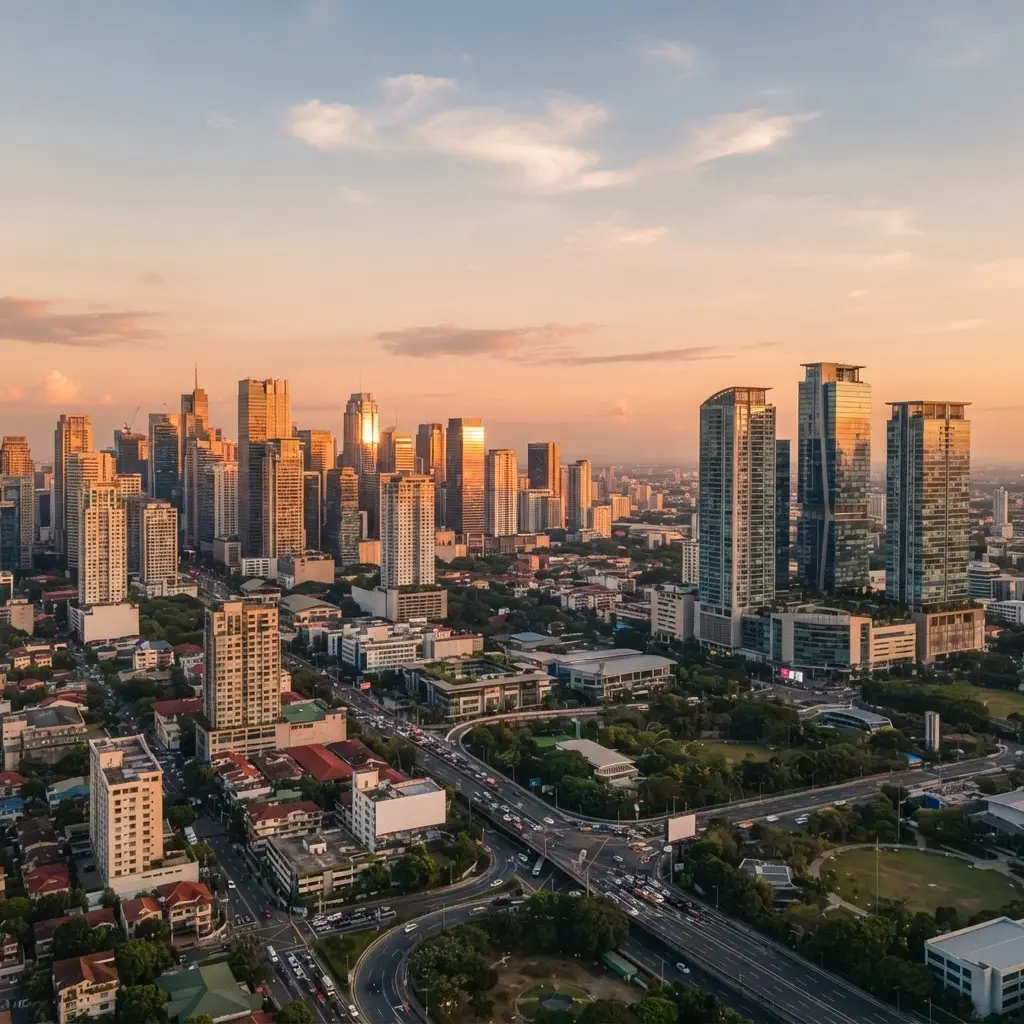
Where Our Philippines-Based Clients Are
Metro Manila
Around 13.5 million people live in Metro Manila according to the 2020 census, and most of our Philippines clients are based here. Senior roles cluster in two districts. Makati’s business district, built around Ayala Avenue, holds many banks and multinational offices, while Bonifacio Global City in Taguig has grown into the newer corporate centre and has housed the Philippine Stock Exchange headquarters since 2018. The Asian Development Bank is also based in the capital region, in Mandaluyong, and employs a large international staff.
Cebu
Cebu City has a population of just under one million, with Mactan-Cebu International Airport and its direct international routes a short drive away. Cebu IT Park has become one of the country’s busiest outsourcing and software hubs, and the export processing zone on Mactan Island adds manufacturing jobs. We see a mix of working professionals and retirees from the wider Cebu area.
Davao City
Davao covers more land than any other Philippine city and had a population of nearly 1.8 million at the last census. It is the main commercial centre of Mindanao, with an economy tied to banana and other agricultural exports through its port. Clients here are fewer in number but often long-settled, with family ties on the island.
Clark and Angeles City
Clark grew from a former United States air base that closed in 1991 after the eruption of Mount Pinatubo. The site is now the Clark Freeport Zone, with its own international airport and a growing business park. Neighbouring Angeles City, home to around 460,000 people, has a sizeable British retired community, and many of our pension-income enquiries come from this area.
Iloilo City
Iloilo City, on the island of Panay, has a population of around 458,000 and has attracted steady outsourcing investment over the past decade. Living costs sit well below Manila’s, and several clients here are building a UK deposit on a remote salary or a local wage.
Retirees Living in the Philippines
Many British retirees move to the Philippines on a Special Resident Retiree’s Visa and live on UK state, workplace or private pensions. Lenders can count pension income for a UK mortgage, and sterling pensions avoid any currency adjustment. Age is the main constraint. Many lenders want the mortgage repaid by 75 to 80. A few will go later in life, and an interest-only arrangement or a shorter term may make the numbers work.

Why Choose Expat Mortgages UK
We work only with expats and foreign nationals, so peso payslips, BIR forms and remote completions are routine for us. We know which lenders accept Philippine income, how much of it they count, and how to present an application so it reaches underwriting in good shape. We hold meetings by video and plan them around the eight-hour gap from Manila, and we keep you updated from first enquiry to completion.
Frequently Asked Questions
Can a British expat living in the Philippines get a UK mortgage?
Yes, a number of UK lenders will consider British nationals living in the Philippines.
Approval depends on your income, deposit and credit history, and using a specialist broker gives you access to lenders that do not deal with the public directly.
Do UK lenders accept income paid in Philippine pesos?
Some do, though the choice is narrower than for major currencies.
Lenders that accept pesos normally count between 75% and 85% of the income. A salary paid in sterling or dollars brings far more lenders into play.
How much deposit will I need?
Plan for at least 25% on a buy-to-let purchase.
Residential purchases can sometimes be arranged with 15% to 20% down, particularly where income is paid in sterling or dollars.
Is there a limit on sending money from the Philippines to buy UK property?
Not one that affects a normal purchase.
The BSP allows residents to buy foreign currency for property abroad up to USD 60 million a year without prior approval, provided the bank receives an Application to Purchase FX form and supporting documents.
Will the Philippines tax rent from my UK property?
If you are a foreign national, no.
The Philippines taxes foreign nationals only on Philippine-source income, but Filipino citizens resident there must declare UK rent and can usually claim credit for UK tax already paid.
What stamp duty will I pay buying from the Philippines?
You pay standard rates plus a 2% non-resident surcharge.
If you own a home anywhere else, the 5% additional dwellings rate applies too, and the 2% can be reclaimed if you later meet the 183-day UK residence test.
Does owning a condo in Manila affect my UK stamp duty?
It does.
Stamp duty counts residential property owned anywhere in the world, so a Philippine condominium triggers the 5% higher rate on a UK purchase. The exception is where the UK property becomes your new main home and you sell the condo inside a three-year window.
Can Filipino nationals living in the Philippines get a UK mortgage?
Yes, specialist lenders will consider Filipino nationals buying in the UK, most commonly for buy-to-let.
Expect larger deposits and closer checks on income and source of funds than a UK resident would face.
Can I get a UK mortgage on pension income while living in the Philippines?
Often, yes.
Lenders can use state, workplace and private pensions, and sterling pensions are assessed without a currency deduction, although age limits at the end of the term will shape how long the mortgage can run.
Final Thoughts
If you have any questions relating to UK mortgages from the Philippines, contact us today to speak directly with one of our expat mortgage advisors.
Expat Mortgages UK is a specialist broker directly authorised and regulated by the Financial Conduct Authority. We work exclusively with expats and foreign nationals buying UK property with overseas income. Your home may be repossessed if you do not keep up repayments on your mortgage.
Call: +44 1494 622 555
Email: info@expatmortgages-uk.com
Related Pages
- Can Expats Get a UK Mortgage? – The eligibility basics for British nationals and foreign buyers living overseas.
- How to Transfer Your Credit History to the UK – How to start a UK credit record before you move back, or while you are still overseas.
- Legal Aspects of Buying UK Property as an Expat – Conveyancing, stamp duty and the legal process explained for overseas buyers.
- How Mortgage Brokers Help Expats Save Money – Where specialist advice makes a measurable difference to the deal you get.
- Expat Mortgage Case Studies – UK purchases and remortgages we have arranged for clients living abroad.